Research Gallery

Bacterial swarm intelligence in a lung-like fractal space, launching collective solitary-waves which interact and redirect to find small confined regions so that they can occupy and condense into.

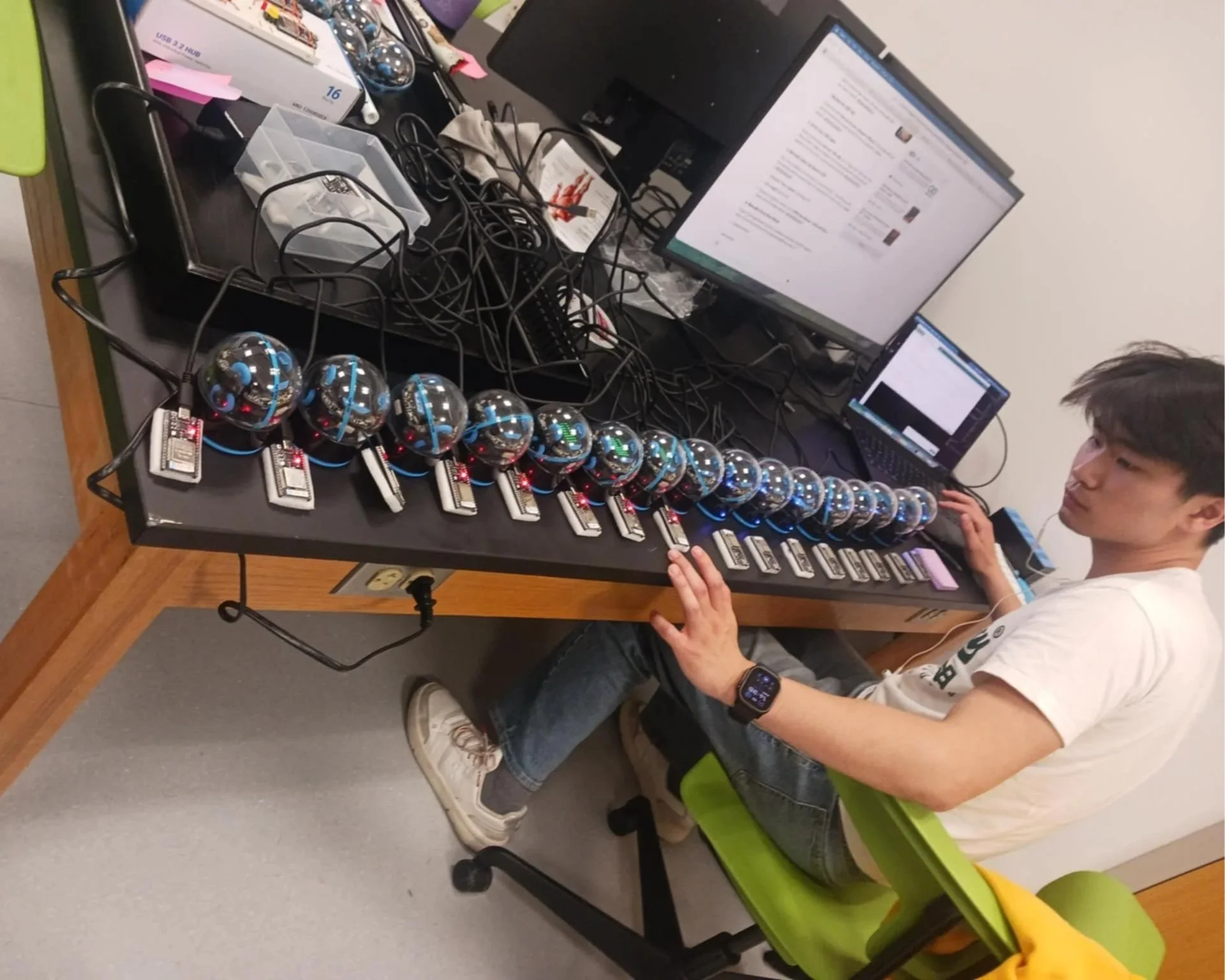
The artificial lifeforms on an interactive LED lightboard that represents a dynamical resource landscape.

An analog simulation which brings new insights into biological evolution and suggests a way to improve cancer chemotherapy: instead of periodic doses of a single drug, stochastic doses of multiple drugs could be more effective.

The cover picture of Physical Review Letter Vol 129 Issue 22 is a figure from our work, which describe the measurement of the local entropy production in a rectifying device by a population of E. coli bacteria (real experiment, on the left) and by the corresponding active Brownian particles (simulation, on the right).

Progression of bacterial growth in a phage gradient, showing how a phage-insensitive bacterial subpopulation can emerge.

The helical morphology of a swimming filamentous E.coli under genotoxic anti-biotic stress.

We developed a fluorescent sensor to reveal the spatiotemporal dynamics of bacteria generated gradients during their collective migration.
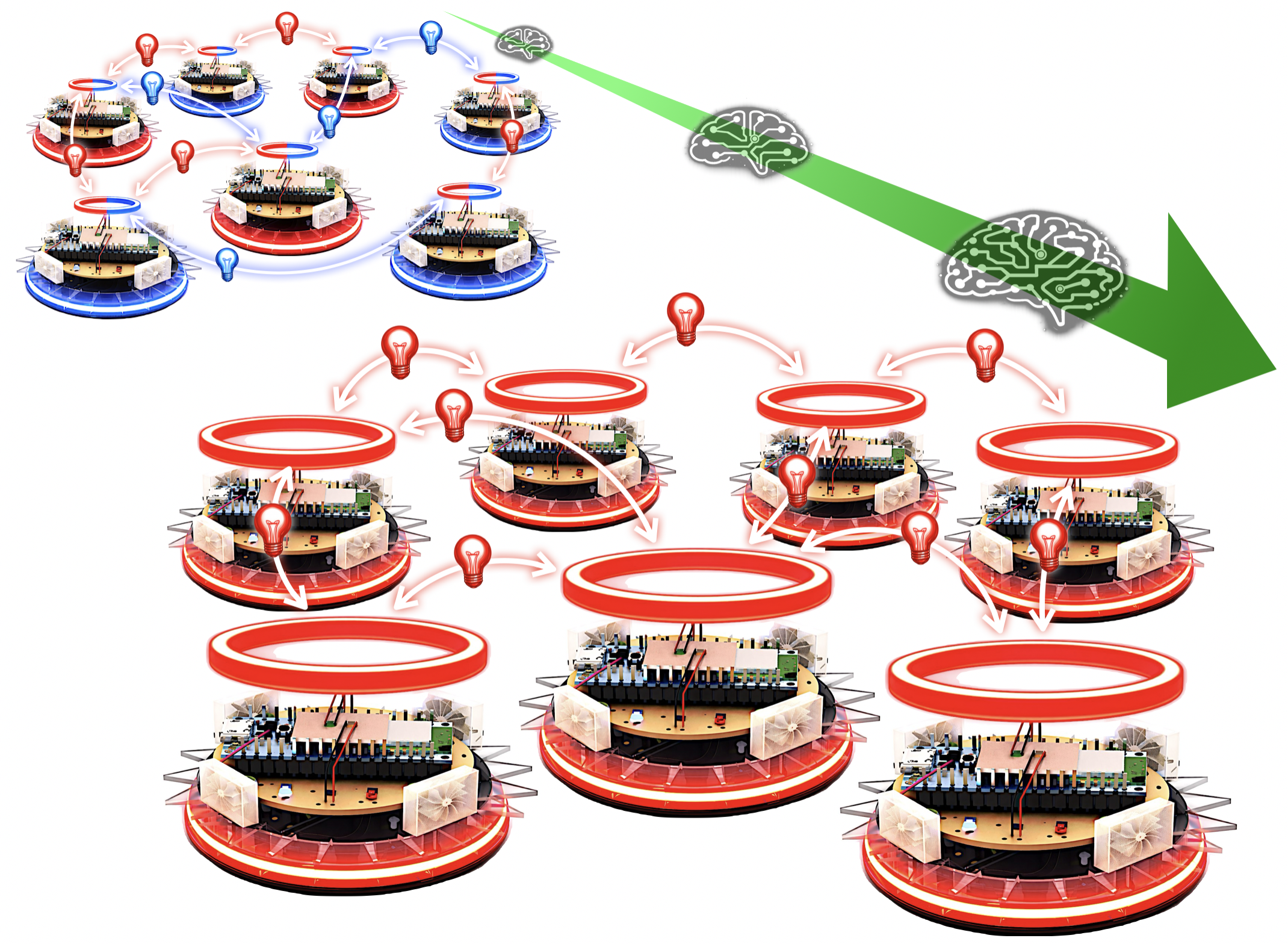
Our attempt to map the politico-physics of opinion polarization with a system of many intelligent reactive agents that have deep memory (which we call mnemomatter).

We created a hydrodynamical black hole to observe how communication between bacteria can help them collectively avoid the event horizon.
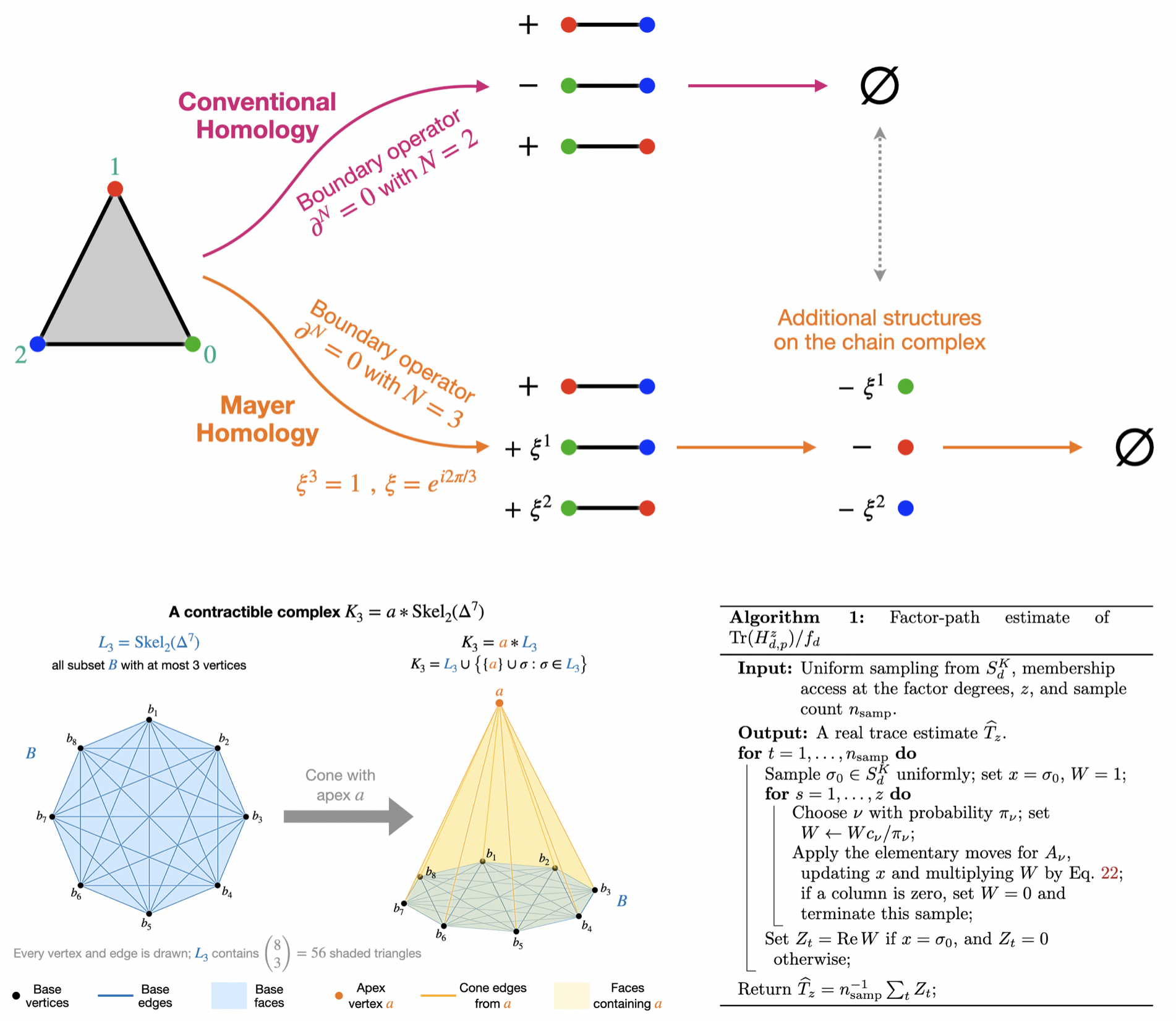
We develop quantum algorithms for Mayer homology that overcome key limitations of conventional quantum topological data analysis, while showing that Mayer Betti numbers can be exponentially large and that quantum computers may solve practically relevant instances beyond current classical methods.
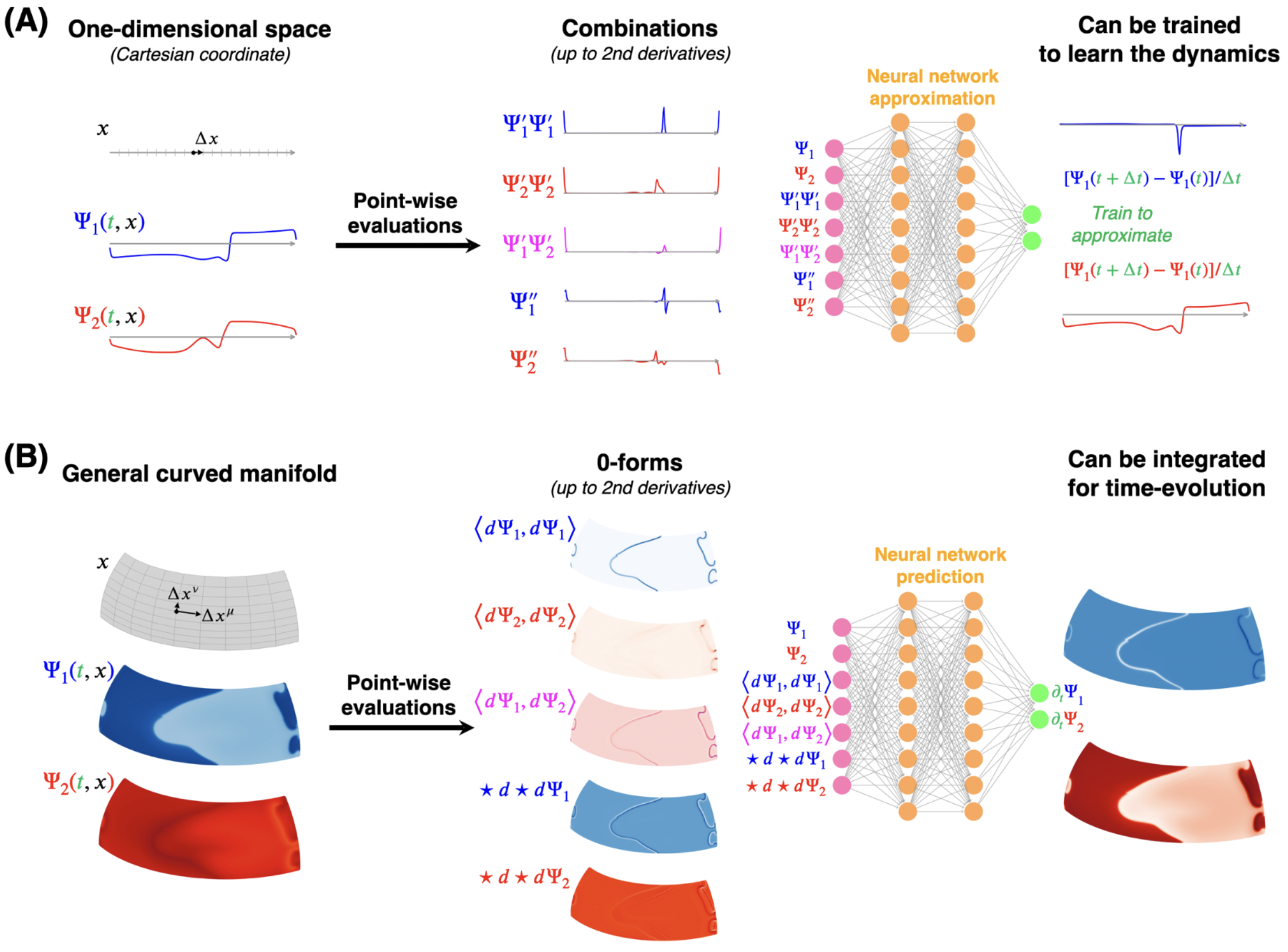
We introduce a "spatially liberated" framework for data-driven discovery of generally covariant PDEs governing coupled scalar fields, emerging as low-wavelength effective theories of locally interacting systems that preserve rotational and reflection symmetries.
Lab Gallery